Create For Creativity
The act of creating sparks creativity; it’s a journey filled with surprises and unanticipated inspirations. Embracing the mantra ‘Create For Creativity’ is my way of staying committed to the continuous process of making.
Think of the brain as a whiteboard, a space where ideas take shape, some larger than life, others less promising. Working on an idea is like wiping it off the board, making room for new, evolving concepts.
In recent years, my perspective on creativity has evolved. While we all possess creative potential, acting on it is a personal and challenging endeavor. The more we learn and engage in the act of creation, the more our ability to generate ideas becomes second nature, entering a state of creative autopilot. Learning to create is a journey, and improvisation is the ultimate reward.
There’s much more to say about creativity, but for now, I highly recommend two talks that have profoundly influenced my thinking. Adam Savage’s ‘Sunday Sermon’ explores the outward-facing aspects of making and the importance of creating opportunities for others. Additionally, Charles Limb’s talk on ‘Your Brain on Improv’ delves into what happens in our brains when we improvise—fundamental insights into how we experience creativity.
Adam's "Sunday Sermon" from Bay Area Maker Faire - Adam Savage
Adam talks about the outward facing aspects of making, and how creating opportunities for others is an importact facet of of maker culture.
Designed by Humans
The world is shaped by either nature or humans. We build, make, and create, and the internet accelerates the spread of ideas, significantly hastening collective progress. Regardless of what we design, it involves careful thought, consideration of angles, and solving complex problems, drawing on the expertise of others, experimenting, and our own experiences.
I'm not a creative person
Doubts about creativity are common, and I empathize with those who feel their creativity fails them. As a child, creativity felt natural and intuitive, especially during improvisation classes. However, this perception shifted as I grew older.
Your Brain on Improv by Charles Limb - Ted Talk
How can the brain generate that much information, that much music, spontaneously?
Making is a vulnerable thing
The act of making is inherently vulnerable, reminiscent of the disappointment when my parents didn’t keep all the art I gave them. However, the most profound sense of despair came when I realized my entire body of work from my first year in art school had been destroyed.
A classmate saved my portfolio, a treasure I am forever thankful for, but it remains incomplete. Many works still needed documentation—sketches, paintings, swatches, a DVD, a collage—all lost.
To be fair, it was partly my fault, as signs warned of the impending cleanup, but I wrongly assumed it wouldn’t affect my class until a day later. While acknowledging my mistake, the pain of losing a year’s worth of work lingered.
Creativity is a gift
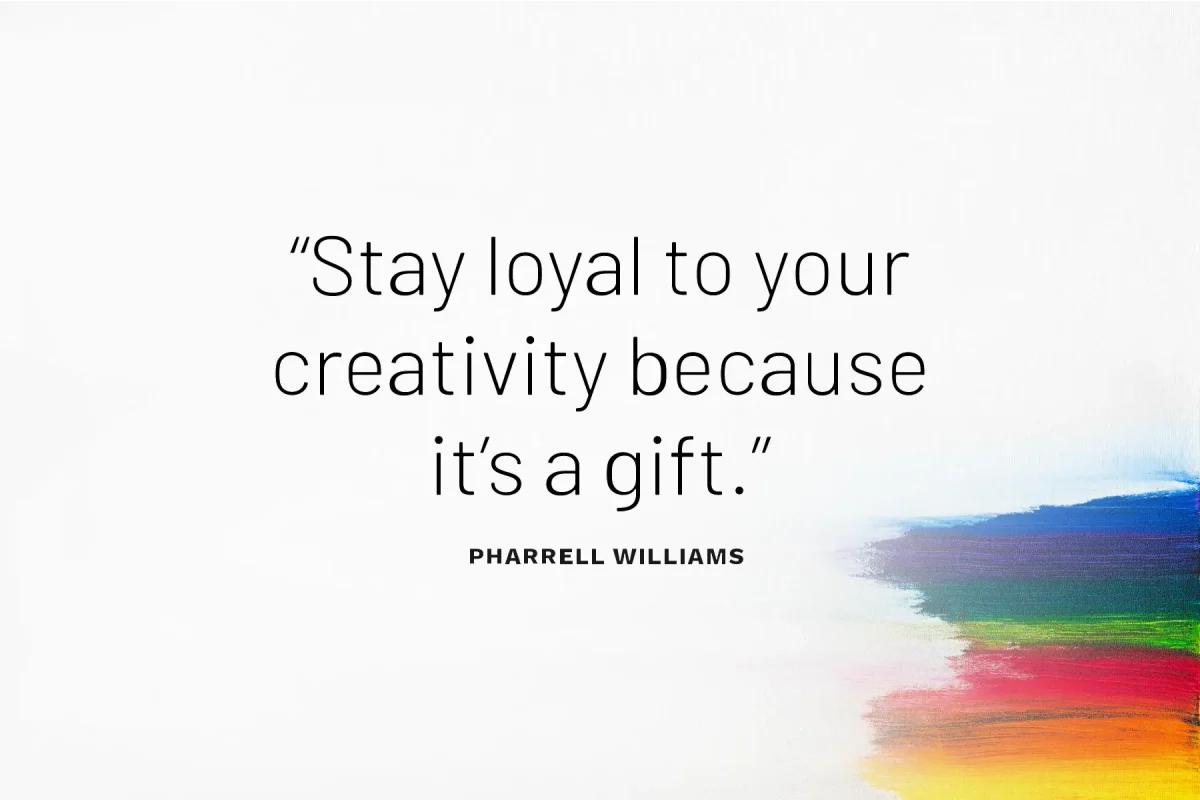
From then on, the fear of potential loss made creating more challenging. As Pharrell Williams wisely stated, “Stay loyal to your creativity because it’s a gift.” The painful lesson taught me that creativity is not guaranteed.
Create for Recovery
I’ve learned that creativity is something we can all tap into, we all have it. It took time to feel comfortable making things again, overcoming initial unease and growing in confidence. ‘Create for Creativity’ became my guiding mantra, a reminder that by doing, I nurture my future creativity.
Speaking to those who claim they are not creative, I now have a different understanding. I believe them, but I make it a point to share my story, emphasizing that, in our own ways, we can nurture creativity by treating it as a skill and not a trait.