Horde Guild
Since 2008, I have been involved in various projects for World of Warcraft guilds. In this discussion, I’ll focus on my work for Bloodsworn, a Horde guild that I led during the Cataclysm, Warlords of Draenor, and Heroes of Azeroth expansions. The scope of my contributions included creating the guild’s website, developing brand materials, and managing the community.
Branding
Early on, I recognized the power of effective branding for a guild. It not only establishes a unique identity and community spirit within the guild but also creates a recognizable brand for outsiders.
When crafting the logo and brand identity for Bloodsworn, it was important for me to incorporate the Horde icon. This not only resonates with those aligned with the Horde but also avoids confusion during recruitment, preventing instances where potential members assume the guild is Alliance.
Website
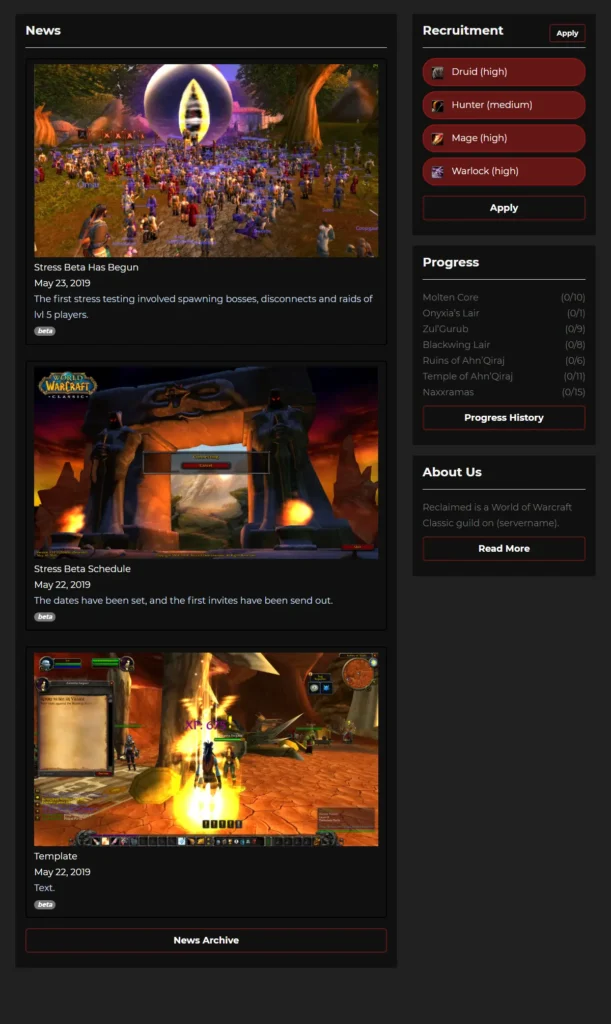
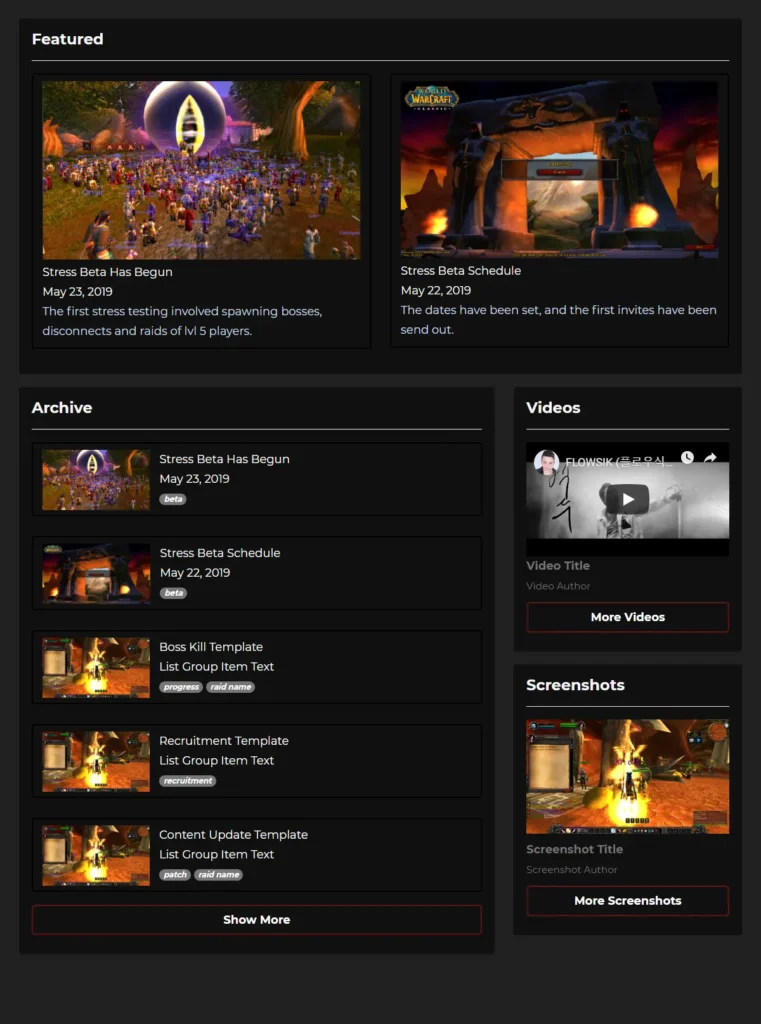
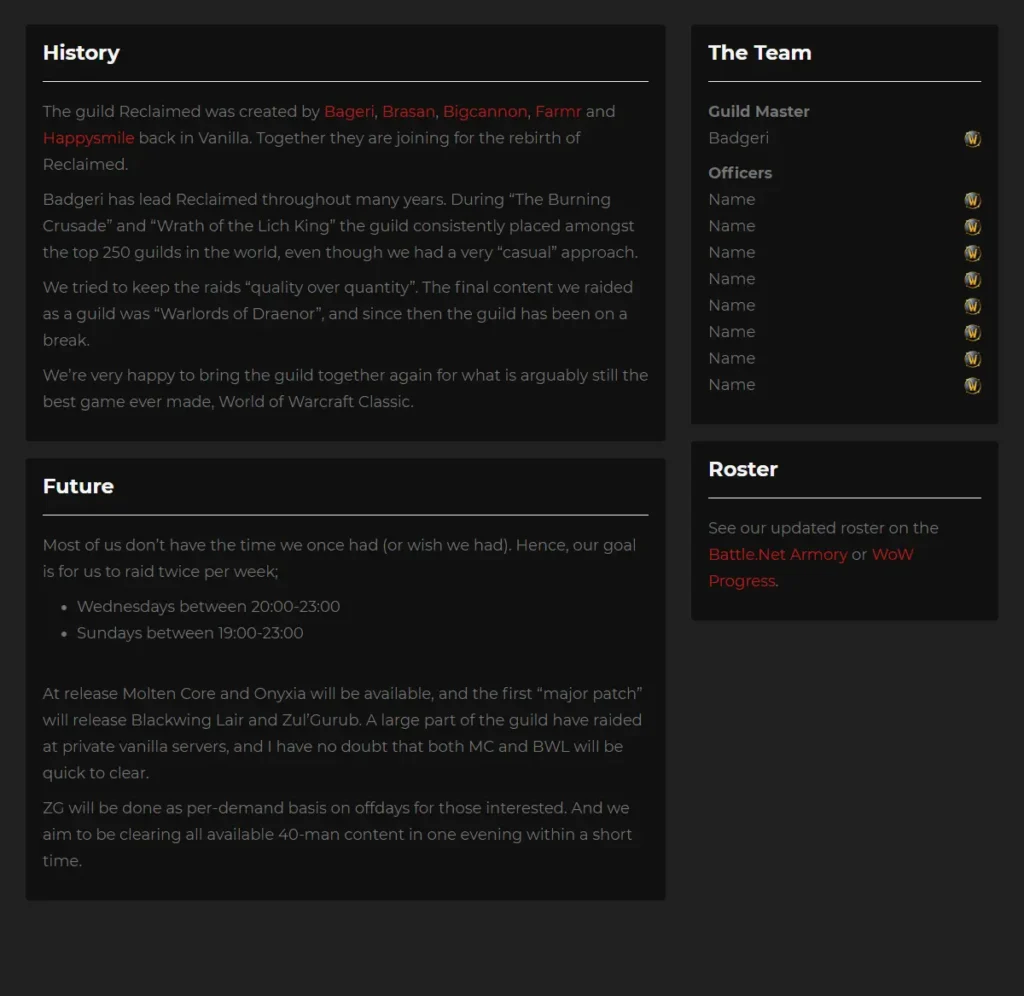
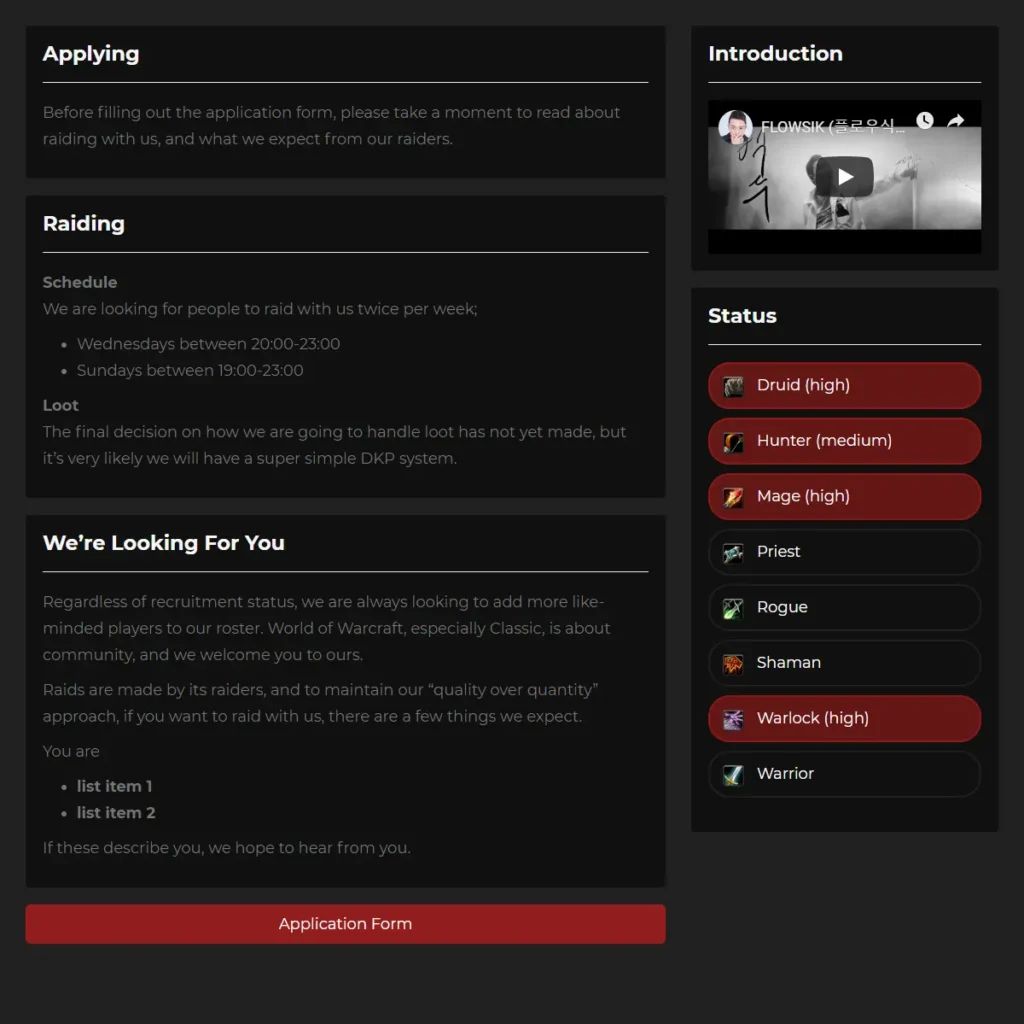
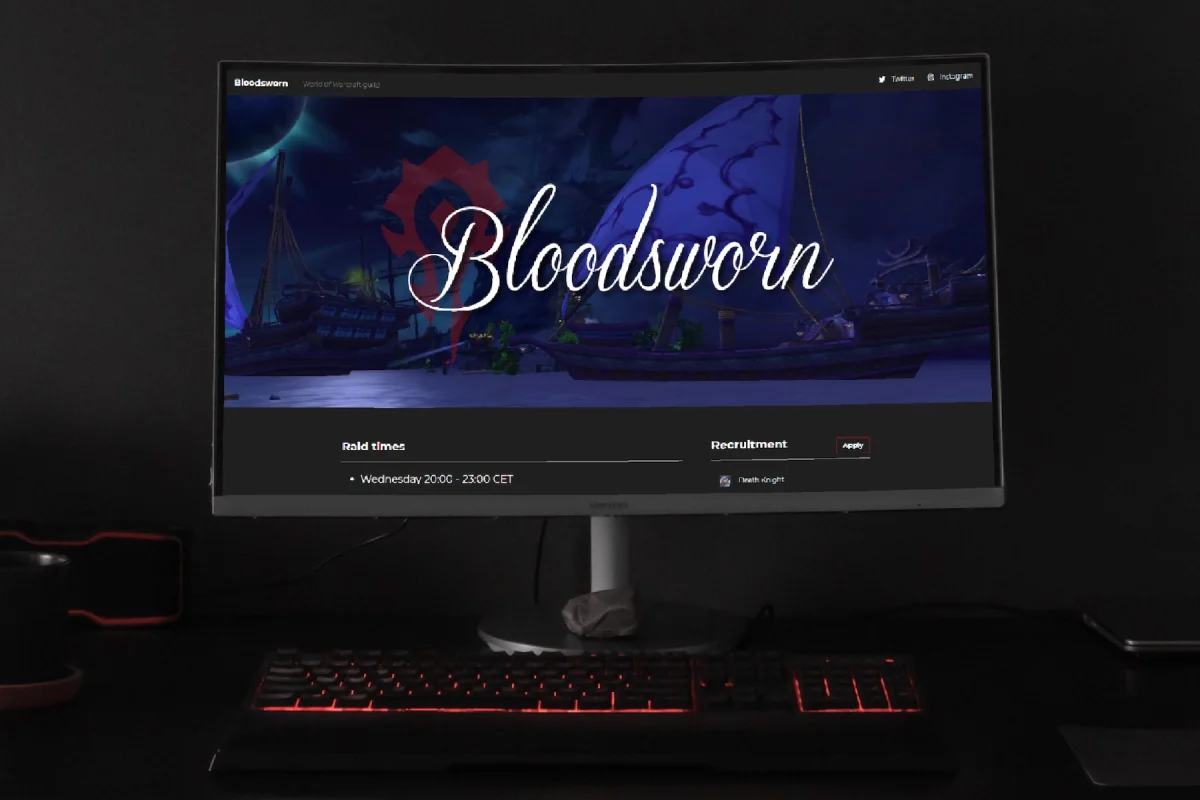
Among the various versions of websites I’ve created, I want to highlight the one designed using WordPress and Bootstrap for Bloodsworn. Opting for a dark theme, which is commonly associated with gaming websites, I aimed to create a distinctive look. The use of red as the primary color further emphasized the Horde theme, providing a bold and attention-grabbing visual experience.
The website served multiple purposes, including facilitating recruitment announcements, providing essential information for applicants, and introducing the guild’s identity, achievements, and community dynamics. As part of our marketing strategy, I leveraged tier progression content, boss kill videos/screenshots, and shared these across platforms, directing interested individuals back to the website.
Community
Effectively managing the guild community was a crucial aspect of leadership. Our goal was to foster an environment where members supported each other, freely asked questions, and shared information in a straightforward manner, ensuring everyone stayed informed and engaged.
To achieve this, we curated a wealth of information on forums and the website, leaving little room for members to be uninformed. This not only encouraged individual understanding but also contributed to building a collective knowledge base. The emphasis was on creating a community where individuals actively contributed their perspectives, fostering a collective hive-mind that was both informed and effective.