Background
My work with Fogwise had me made a lot of considerations, both about user data as it relates to GDPR, and also as it relates to how people prefer to be identified. It led me down a rabbit hole of balancing business insentives to collect as much data on people as they want, combined to people’s desires to share a lot about themselves on the internet.
User Data
In May 2018, while I was working with Fogwise, the EU law General Data Protection Regulation (GDPR) went into effect. This meant a lot of changes for many businesses in the way they ware collecting, storing, handling and deleting their data.
Identity
At the same time, on the other side of the internet, were conversations on social media platforms such as Reddit and Twitter, regarding identity, self-expression, and maybe most prominently, pronouns.
It was a time in which social media, and people access to it, was blooming, and with that came a desire from many to express who they were, but also want to open the door to broaden the horizons of others. Many people started to declare their pronouns in their bios, and there were encouragements to not make assumptions, or make people feel stigmatized.
Us, but in Space
These things further deepened my thinking regarding how to balance what people want to share on the internet, and the responsibility of data collectors on what to do with all this information. All these considerations regarding user identity and data, inspired me to want to create something which would symbolize who we are in cyber space.
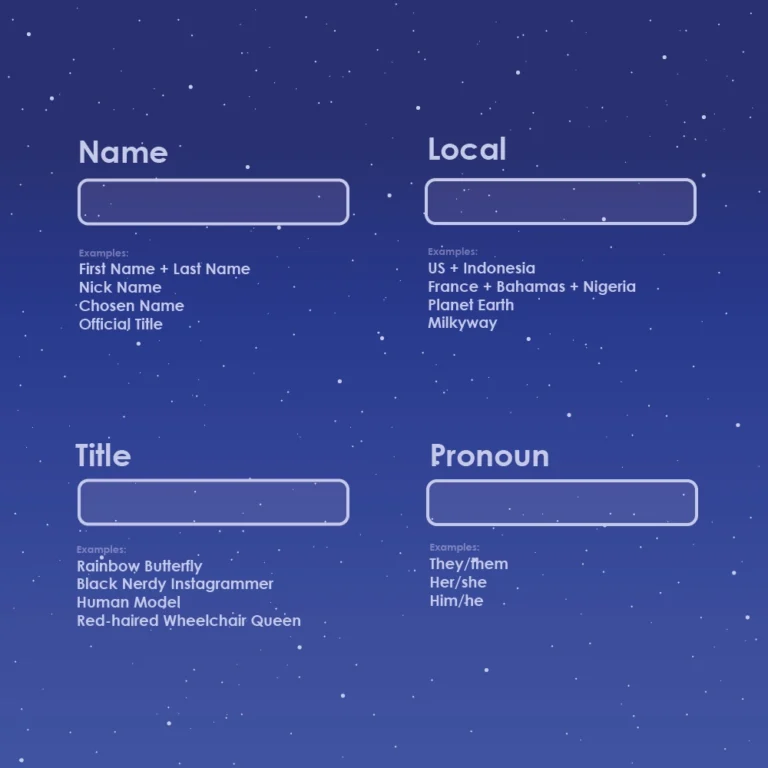
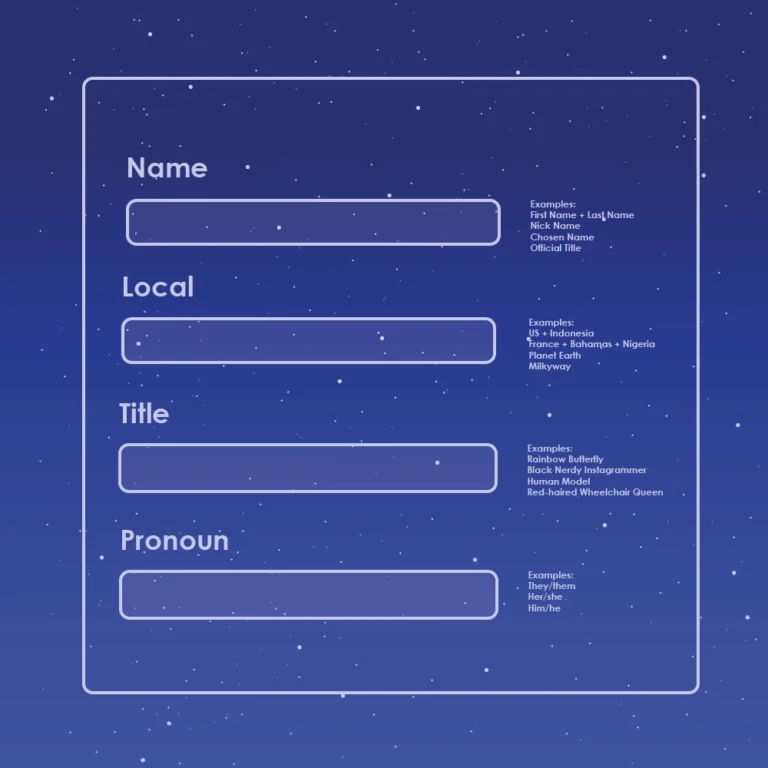
Rather than the conventional contact forms, with common questions such as location, profession and gender, I offer these alternatives:
- Local: meaning not merely your specific location, but expands to where you want it to be, as specific or as generic as you feel comfortable. These can also be where you’re culturally from, or nationality you most identify with.
- Title: These can be job related, but can also include your goals and ambitions, for yourself, for your community or for your planet.
- Pronouns: Rather than give the option between male, female and non-binary options, my idea was to leave this open. We may not be aware of all pronouns, nor do we maybe have to be, but giving people the freedom can be a small kindness, that doesn’t cost us anything.
Reflections
Since I’ve made this piece, the conversations about GDPR and identity, continue to actively influence the internet, but also the real world around us. Application Discord recently added the option for users to add their pronouns specifically into their user profile.
I remember, around 2019 going to an event, in which people made short introductions of who they were, and one person in particular used pronouns to do so, saying they prefer the pronouns they/them.
These things may not be important to everyone, but the idea of being seen for who we think we are, and not to be confused, or generalized, is not an uncommon notion, and it will be interesting to see where this will evolve into in years to come.


